In my previous article, "How Language Shapes Our Reality," I shared some insights from my time living in France and how immersing myself in a new tongue, as an architect of technical systems, profoundly shifted my perception.
I touched on the beauty of the Welsh language, and how words like 'hiraeth' encapsulate feelings far beyond a single English equivalent, weaving a narrative and a story into our very expression.
Dim probs!
Lately, though, my linguistic ponderings have taken a more personal turn, sparked by my ongoing journey with the Welsh language. I found myself in a bit of a pickle trying to find a neat, single phrase for "don't mention it," or "you're welcome," like the French "de rien" or the Spanish "di nada." The closest I've landed is "Dim probs" (no problems), which, while perfectly functional, got me thinking. Why isn't there a direct, elegant equivalent for dismissing thanks?
This led me down a fascinating rabbit hole, pondering the Welsh approach to "problems" themselves. It occurred to me that perhaps, in the Welsh mind, a "problem" isn't always seen as a rigid obstacle demanding a singular, immediate solution. Instead, there's often an underlying adaptability, a willingness to adjust, to find a different path if the first one hits a snag. "Well, we will do something different if that's the case then," as I've often thought, perfectly captures this spirit.
It's less about battling the "problem" head-on, and more about flowing around it, finding a new way forward.
The Unspoken Strength of Welsh Pragmatism
Now, a quick word of apology and a gentle excuse for this article's title. The Welsh, by and large, aren't ones to shout from the rooftops about our perceived strengths. Generally, these quiet insights are best kept amongst friends, perhaps discussed over a cuppa or a pint down the local.
But in the interest of sharing insights on this platform, I felt it was time to compile these thoughts.
This inherent pragmatism, this adaptability to challenges, is a hidden power that I believe translates remarkably well into the world of technology. When you're architecting complex storage solutions, or indeed any system, the ability to anticipate, adapt, and pivot around unforeseen difficulties is essential.
It's about designing systems that aren't just functionally sound, but robustly flexible, capable of navigating the inevitable twists and turns of real-world data and workflows.
It's about understanding that sometimes, the "best" solution isn't the one that perfectly fixes a perceived "problem" on paper, but the one that allows for fluid navigation, resilience, and evolution.
This perspective, I believe, is deeply ingrained in the Welsh way of thinking. It seems there is a quiet strength, forged over generations of adapting to changing landscapes, both literal and metaphorical.
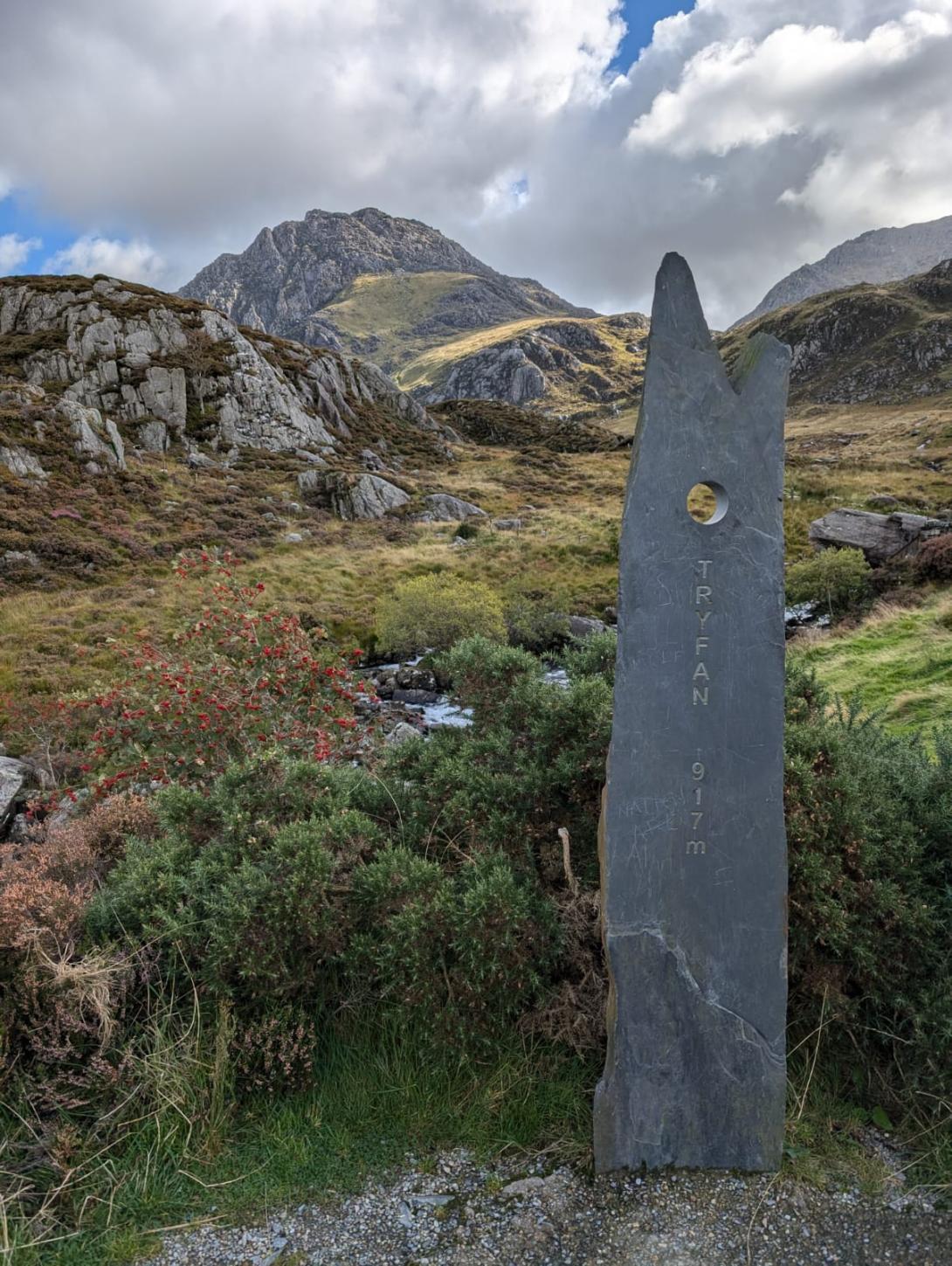
The Welsh Connection from Snowdon to Silicon
And speaking of connections, here's a curious thing. No matter where MewMew, our trusty campervan, has taken my family and me across eleven countries in Europe and Scandinavia, I've invariably met another Welsh person.
It's like we're a hidden network, appearing in the most unexpected places!
Whether it's the peaks of the Alps or the bustling markets of Scandinavia, a shared accent or a casual "bore da" will inevitably reveal a fellow countryman. We get everywhere, quietly weaving our influence into the fabric of global communities.
This widespread, yet often understated, presence reflects something about our approach: we adapt, we integrate, and we contribute without necessarily demanding the spotlight.
This subtle influence, this quiet strength, is something I now consciously seek to leverage in my work with global teams. Understanding these different linguistic and cultural frameworks is about designing solutions that are truly robust, adaptable, and culturally aware.
Did this resonate with you?
So, for those of you out there grappling with complex technical challenges, or simply trying to build more resilient systems. Have you ever noticed how different cultural perspectives, perhaps even those you encounter closer to home, influence the way "problems" are defined and solved?
And for my fellow Welsh diaspora, where have you found your "hidden power" making an unexpected impact?
I'd love to hear your thoughts.
Nicholas Llewellyn is a Solutions Architect at PixitMedia a DataCore Company, specialising in designing robust storage solutions for the media and entertainment industry. He has a passion for exploring the intersection of language, culture, and technology, often sharing insights gained from his travels across Europe in his self-built campervan, MewMew. You should connect with him to discuss how diverse perspectives can drive innovation in both technical systems and human understanding.