Defragging the Architect's Brain
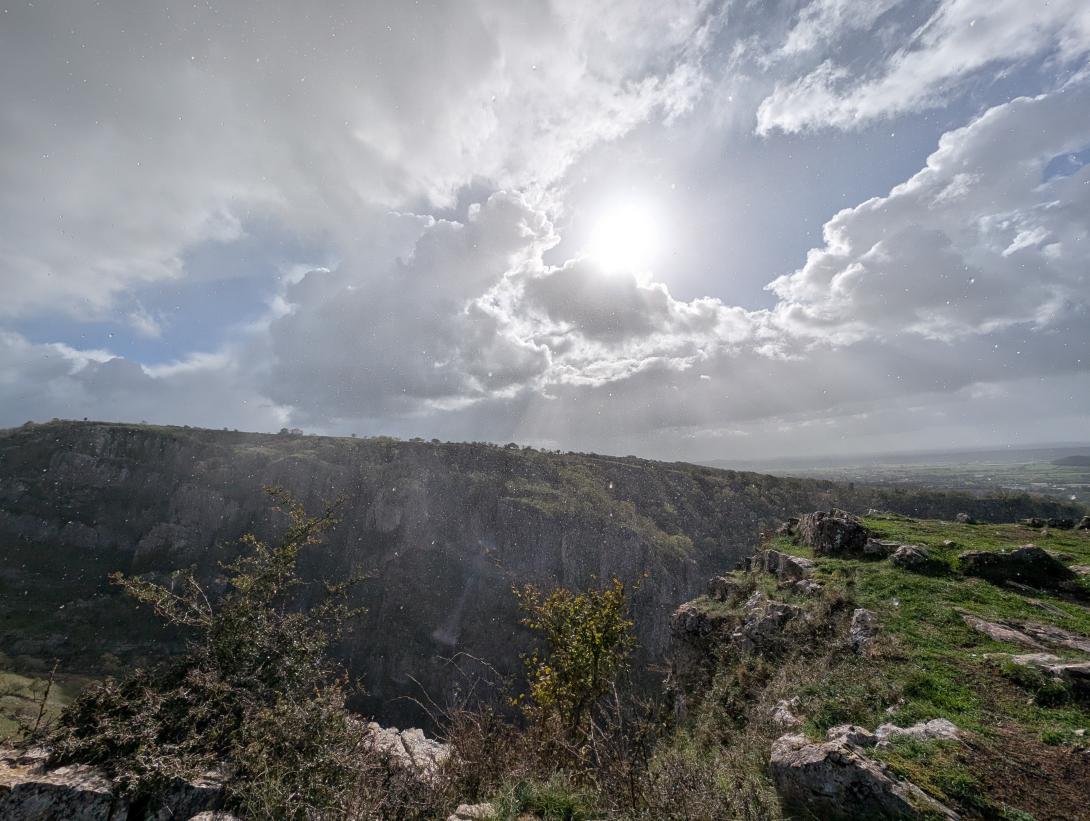
The van was nearly packed last night, with just a few bits to grab at the last minute today, but Rachel, Evie, and I are set to leave for Cheddar Gorge at 18:00 sharp. The forecast is, to be fair, challenging. Yet, I’ve rarely looked forward to a damp weekend more.
This trip is about performing the essential maintenance required to do my demanding day job well. It’s Friday afternoon. As I wrap up a week of thoroughly auditing multi-petabyte, multi-site storage deployments for our long-standing customers' storage infrastructure, my focus shifts. The blustery, wet weather outside calls to me, and I’m already looking forward to towelling myself down after a long day’s walking around Cheddar Gorge tomorrow.
I’ve learned the hard way that relentless, high-focus work, the kind I’ve always relished, has a profound cost if not balanced. My time as an IT Manager at a global Pharmaceutical company is a stark reminder. I was spearheading transformative initiatives, helping the company achieve a $1Bn turnover milestone and a place on the FTSE 250. I thrived on the pressure. But with 70-hour weeks, the hiking, the motorbiking, the simple act of being outdoors, vanished. It took three years for that cumulative deficit to fully manifest as I discovered the power those restorative outlets had for me, but not before, the house of cards collapsed into a diagnosis of severe depression. I remember my GP in Surrey at the time being remarkably perceptive. Instead of just writing a prescription, she verbally prescribed a weekend in the Brecon Beacons, explaining that the one thing that had fundamentally changed in my life was the absence of the outdoors. My system, she implied, needed topping up.
That advice was a lifeline, and it aligns perfectly with concepts like Attention Restoration Theory, which suggests that nature restores our capacity for focus. For years, I believed that what I had been missing was a form of mindfulness. I formally undertook to practice mindfulness meditiation daily, in the absence of the intense, present-moment concentration required to navigate a mountain trail or ride a motorbike. I was right, but it was only half the story. The other critical component I’d lost was its complete opposite: the time for my brain to ‘de-frag’.
Kickstarting the Brain's Maintenance Cycle
Neuroscience calls the system responsible for this defragging process the Default Mode Network (DMN). My understanding is that this powerhouse of background activity switches on the moment you stop focusing on a specific, external task. You can trigger this state through semi-automatic activities that don't require your full concentration: a long drive, a familiar walk, riding a motorbike on an open road, or even just staring out of a window.
Once activated, the DMN gets to work running the brain’s essential maintenance routines. It’s like the bitrot protection in an object store, the Verify Object Task (VOT) that checks an object’s health, or the defragmentation of an old file system. It’s in this state that the brain:
- Consolidates memories, filing away important information.
- Connects disparate ideas to solve problems you’ve been stuck on.
- Processes social and emotional events.
- Engages in creative thought and future planning.
This is the core work that underpins high performance, I no longer think of it as time-wasting. I always had the feeling that a lot of my ‘work’ is done in the evening, in the shower, or on a long walk is, it turns out this insight is backed by science!
This drive towards high-pressure environments is a core part of my professional DNA. I relish complexity and the weight of responsibility. But I’ve come to understand that this inclination is a double-edged sword. Thriving on pressure is an asset, but without a counterbalance, it’s a direct path to burnout. My journey now is less about finding the next big challenge and more about integrating these essential periods of de-focus.
This weekend, then, is a deliberate DMN activation session. Setting up the van tonight will be a battle against gusty winds and rain. Tomorrow, waterproofs on, we’ll tackle the 6.5km Gorge Walk trail. The challenging conditions demand just enough presence to keep the foreground of the mind occupied, allowing the DMN to run free. The rhythmic act of the pair of us walking through a blustery landscape with a dog and a thermos of hot soup is the perfect catalyst for this mental reorganisation.
The real challenge is bringing this practice into a packed work week. This trip is also a reflection on that. How do I build in this maintenance to prevent the boom-and-bust cycle? Maybe it’s time to restart a structured physical program like Couch to 5K or my Starting Strength barbell training. These activities are scheduled rituals of disconnection, and I need to reconnect with them, but I don’t want them to displace something else.
Ultimately, understanding this neuroscience is key to my personal vision of cultivating a balanced lifestyle. This weekend is an essential part of it. I'm running a full diagnostic and defragmentation cycle, so I can return next week with optimal processing power, ready for the next challenge. Now, if you'll excuse me, Cheddar is calling.